If you’re an independent contractor, freelancer, or business owner, you’ve probably heard of Form W-9. In this guide, we’ll walk through what a W-9 actually is, who needs one, how it’s different from a 1099, and when you’re required to use it.
TL;DR: A W-9 is a simple one-page form where you give your tax info (like your name, address, SSN or EIN) to someone who’s paying you. If you’re a freelancer or contractor, you’ll fill these out for clients. If you’re a business owner, you’ll collect them from people you hire. The form stays with whoever requested it, it doesn’t go to the IRS. Later, if you paid someone $600 or more (note: this threshold will increase to $2,000 in tax year 2026), they’ll use that W-9 info to send you a 1099 tax form.
What is a W-9?

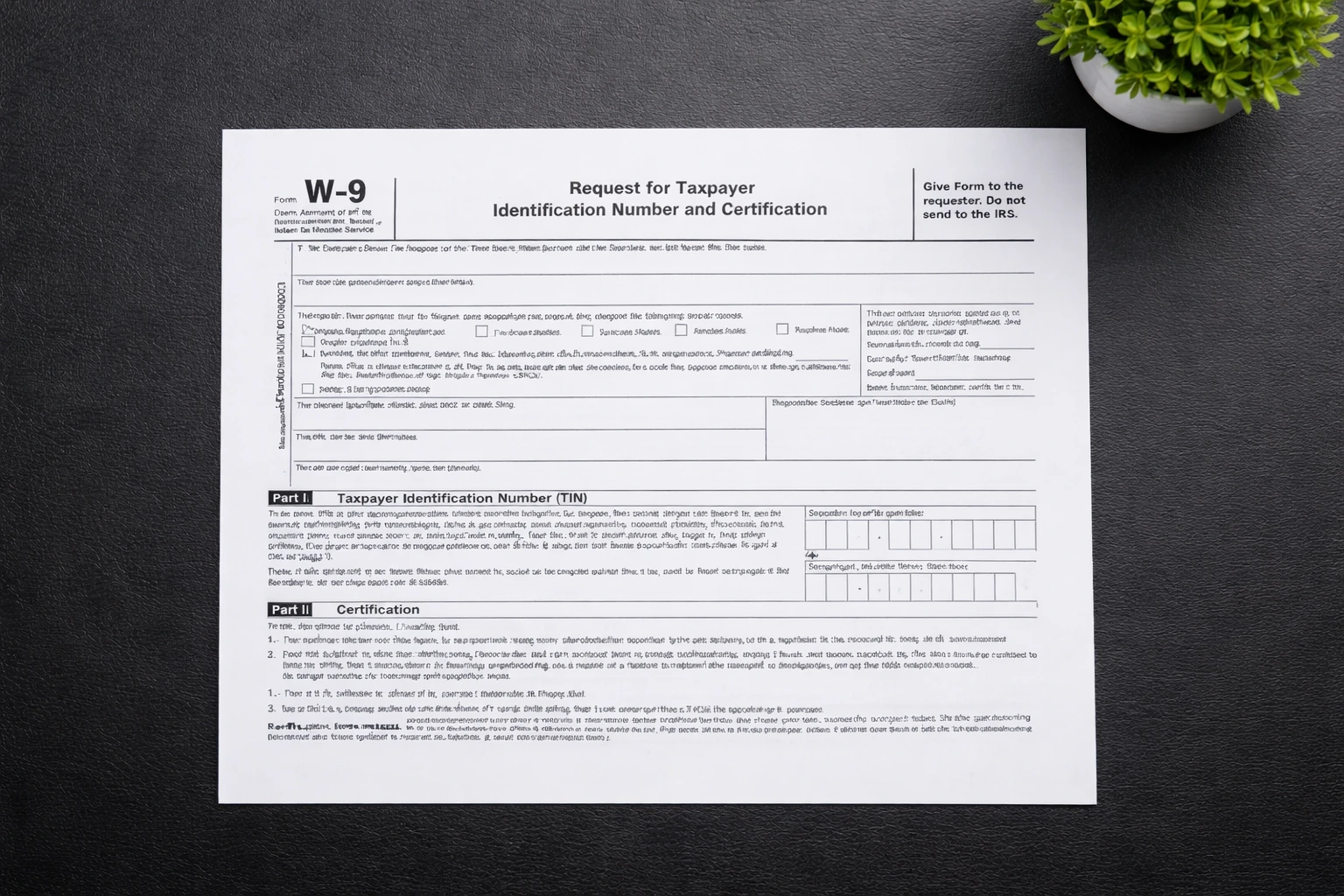
Form W-9 (officially called “Request for Taxpayer Identification Number and Certification”) is a one-page IRS form that lets you swap tax information between the person paying and the person getting paid. Essentially, it’s just a form where you write down your basic tax details, including your name, address, and Taxpayer Identification Number (TIN).
Example: Let’s say you’re doing some freelance graphic design work. Your client will probably send you a W-9 to fill out so they have your correct information for their records. If you’re someone who needs to complete a W-9 and haven’t received one from clients, take the initiative and send them your completed W-9.
Who Needs to File a W-9?
Pretty much anyone getting paid as a non-employee should expect to complete a W-9 for whoever’s cutting the check.
If you’re an independent contractor, freelancer, or gig worker doing work for a business, they’ll probably hand you a W-9 to fill out. Again, if they don’t give you one, you should send them a completed one.
On the flip side, if you’re running a business and you hire people who aren’t on your regular payroll, you need to collect W-9s from them. Basically, any U.S. vendor or contractor you pay for services (who isn’t your employee) should complete a W-9 for you.
Examples of Who Needs to Complete a W-9

Independent Contractors & Freelancers: Think designers, writers, consultants, ride share drivers, IT contractors. Basically anyone you’re paying for their services but not adding to your employee roster.
Vendors or Sole Proprietors You Hire: That LLC doing repairs on your building? The sole proprietor handling your social media? That caterer for your company event? They all need to fill out W-9s.
Landlords or Property Owners: If your business pays rent to an individual or partnership landlord, grab their W-9. (Rent paid to non-corporate landlords gets reported on a 1099-MISC.)
Attorneys or Law Firms: Even if the law firm is incorporated, you’ll need a W-9 if you’re paying legal fees or settlements. Attorney payments are special and they usually require 1099 reporting no matter what.
The bottom line: any U.S.-based person or business you’re paying for services (who isn’t on your employee payroll) should hand over a W-9 so you can document everything properly.
Who Doesn’t Need a W-9?
Employees don’t use W-9 forms. Instead, they fill out Form W-4 for tax withholding instead. W-9s are only for independent contractors, vendors, and other non-employee payees.
Also, W-9s are for U.S. taxpayers only. If you’re working with someone from another country, they’ll complete one of the W-8 forms (like Form W-8BEN) instead.
Is a W-9 the Same As a 1099?
This trips people up all the time, so let’s clear it up: No, a W-9 is not the same as a 1099. But they go go hand-in-hand. Here’s how they work together:
W-9 = info you provide upfront
1099 = info the business reports later
When you start working as a contractor, you fill out a W-9 and hand it to whoever’s paying you. They keep it in their files and it never goes to the government.
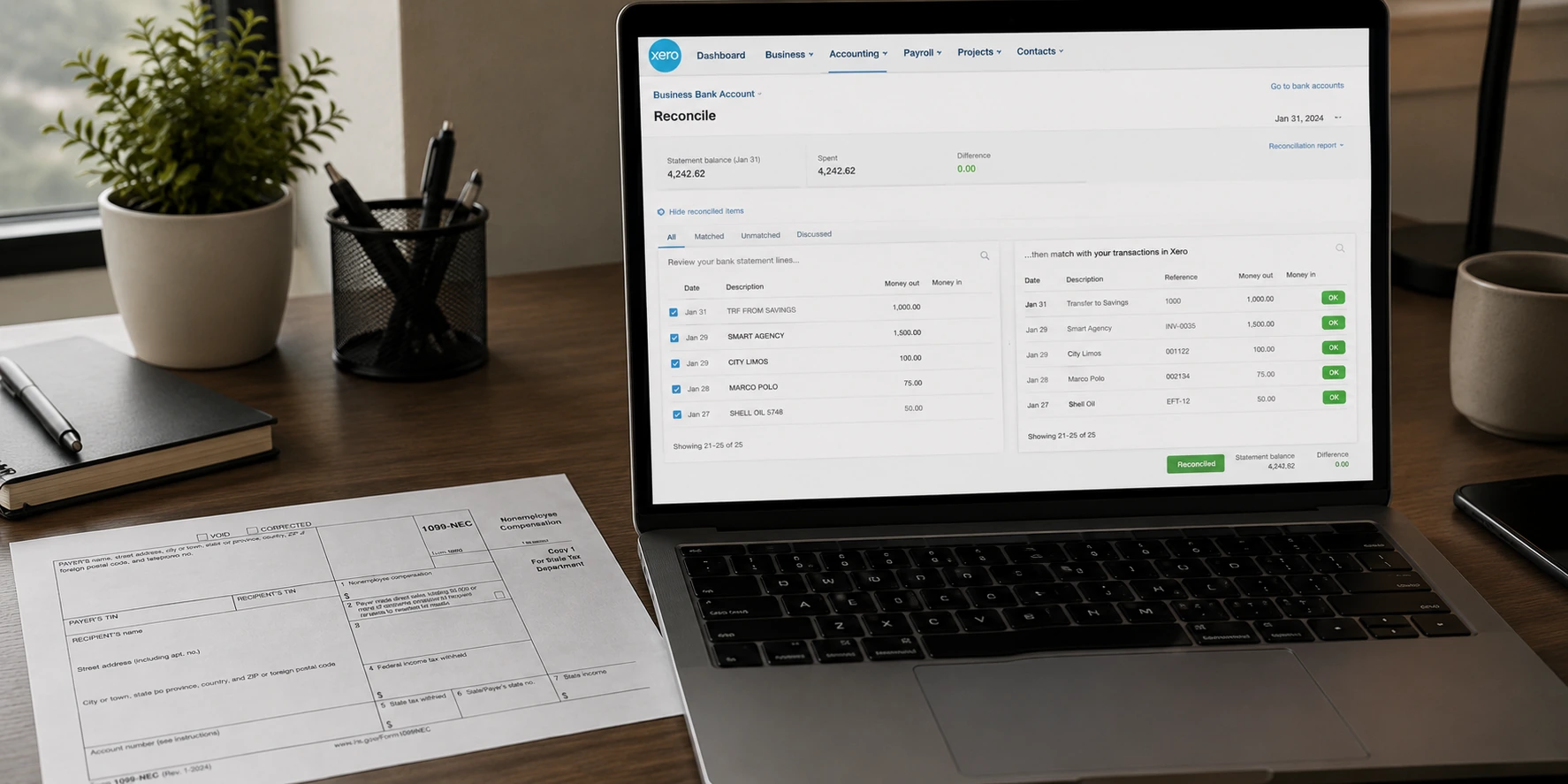
After the year ends, if you were paid enough to trigger tax reporting, the business will send you a Form 1099 (usually a 1099-NEC for contractor payments or a 1099-MISC for certain other types of payments). That 1099 goes to the IRS and shows how much you got paid over the year. You also get a copy for your own tax return.
How Much Do You Need to Make Before You Need a W-9?
Yup, there’s a dollar amount that triggers all this W-9 and 1099.
Until The 2025 Tax Year
If you’re filing in 2026 (tax year 2025) or before, the threshold will be $600. If a business paid an independent contractor $600 or more over the year, the IRS required that business to issue a 1099, which means they needed to get a W-9 from the contractor first. If the total payment was under $600, the business typically didn’t have to file a 1099 for that person.
Starting in The 2026 Tax Year
Here’s where things just changed: A new tax law is bumping up the 1099 reporting threshold to $2,000 (and it’ll adjust for inflation going forward). So for payments made in 2026 and beyond, companies only have to issue a 1099-NEC if they paid a contractor at least $2,000 during the year.
Payments below that new threshold are still taxable income for the person receiving them, but the payer isn’t required to send a 1099 or do backup withholding on those smaller amounts.
Need Help Navigating Tax Season As A Freelancer?

JBS Corp is an accounting and tax firm with offices in Methuen and Lawrence, MA. We’re celebrating our 20th tax season in 2026, and we’ve helped countless individuals and businesses navigate the maze of W-9s, 1099s, and all those other tax forms that leave you confused.
Our team is here to make tax time (and all that paperwork) as smooth and painless as possible.
Let us put our two decades of experience to work so you can focus on what you actually enjoy doing… running your business!
Note: All figures, percentages, and tax rules are subject to change and this article may not reflect the most recent updates; visit IRS.gov for the most current information.