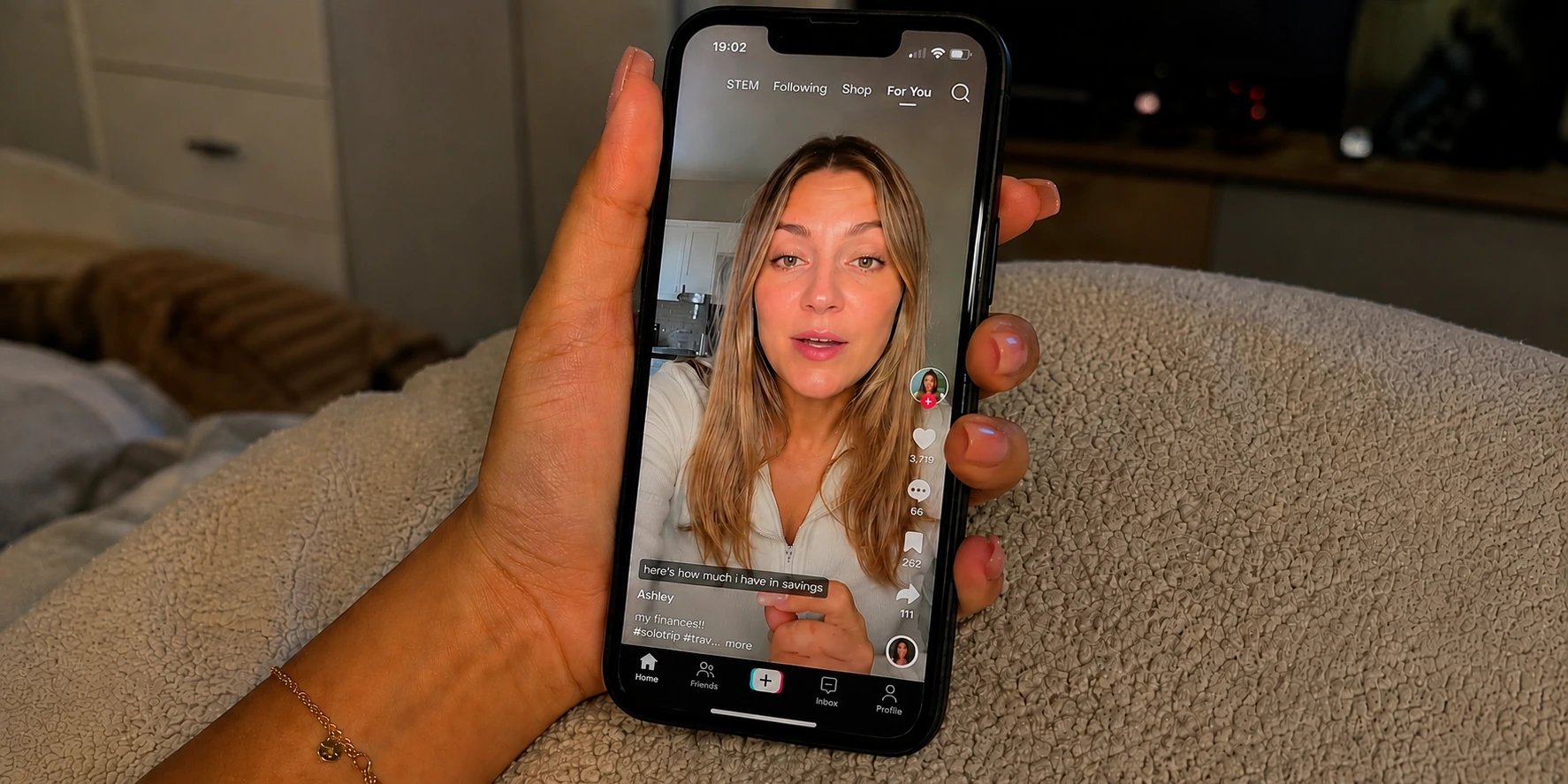
If you’ve been on TikTok lately, you’ve probably seen people filming themselves with on-screen text that shares: checking account balance, savings, student loans, credit card debt, retirement, and more. All of it, on camera, for strangers to comment on. Some of the numbers are clearly inflated (a 22-year-old with hundreds of thousands in investments raises some questions), but a lot of what’s being shared, especially from people in their 30s and 40s, is painfully real. Big student loan balances, credit card debt that’s been sitting there for years, retirement accounts that haven’t grown since the first job. Here’s an example of the most viral video from Mattie G which, as of writing, has 1.2M views!
The comment sections turned into an unexpected financial reality check for a lot of people. Seeing someone close to your own age with $80,000 in debt and $300 in savings hits differently than a generic article about American debt levels. But here’s the thing: you don’t need to post your bank account on the internet to figure out where you actually stand. Our team put together an honest look at what the trend is surfacing and what it might mean for you.
TL;DR: The May 2026 TikTok financial transparency trend is showing that many people carry significant debt with little savings or retirement to show for it. You don’t need the post to see where you stand, awareness of a few key areas, savings, debt, retirement, and taxes, can tell you a lot about whether you’re on track.
What The Trend Is Actually Showing Us
The viral part of this trend isn’t the people with hundreds of thousands in their 20s. Those videos get views because they feel aspirational or suspicious. The videos that are actually striking a nerve are the ones from regular people showing a $200 checking balance, $45,000 in student loans, $12,000 in credit card debt, and a retirement account at $0 because they had to cash it out.
Those videos are getting hundreds of thousands of views and comment sections full of “this is me” and “I thought I was the only one.” That collective recognition is worth something. Financial stress is common, and the shame around it often keeps people from looking at their situation clearly. The trend, whatever its flaws, is at least getting people to look.
Your Full Financial Picture Is Fuzzy
One of the things the trend unintentionally reveals is how many people don’t have a clear picture of their own finances until they sit down to make a video about it. If someone asked you right now to list every debt you carry, every account balance, and your rough monthly budget, how confident would you feel?
Most people can name their rent or mortgage. Beyond that, things get fuzzy. A student loan on autopay since 2014, two credit cards at different banks, a car payment, maybe a personal loan. If your complete financial picture lives somewhere in the back of your mind rather than somewhere you can actually see it, that’s a good place to start.
The Consumer Financial Protection Bureau has free tools for building a budget and tracking debt if you want somewhere to begin.
Your Savings Aren’t Keeping Up With Your Life

The TikTok videos that generated the most conversation were the ones where someone in their late 30s showed a checking account under $500 with no savings account to speak of. Again, no judgment here. Life is expensive and circumstances vary. But if you’ve been working for a decade and have almost nothing liquid, that gap is worth understanding.
A common benchmark is three to six months of expenses in an accessible account. A high-yield savings account lets that money grow while staying available. If that target feels out of reach right now, start smaller. $500 is a real goal. $1,000 is a real goal. Give yourself grace and meet yourself where you’re at.
For freelancers and self-employed individuals, the savings conversation gets more complicated because taxes aren’t being withheld for you automatically. JBS provides tax services to individuals and freelancers, and part of that work is helping people figure out what they should actually be setting aside.
Retirement Got Pushed To “Later” And Later Became Now
A pattern that showed up repeatedly in these videos: people in their mid-30s and 40s with retirement accounts that hadn’t been meaningfully contributed to in years. Some had nothing at all. The comments on those videos were telling. A lot of people recognized themselves.
Retirement savings compound over time, which means the cost of waiting goes up every year. If you have a 401(k) and aren’t contributing enough to capture the full employer match, that’s money being left behind. If you’re self-employed or your employer doesn’t offer a plan, a Roth IRA or SEP-IRA is worth looking into.
High-Interest Debt Is Quietly Running The Show

Credit card debt was one of the most common things people shared in these videos, and the comment sections reflected how widespread it is. Carrying a balance at 20% to 25% APR while making minimum payments means most of what you’re paying goes to interest, not principal. The balance barely moves.
There’s no shame in being there, many of us have, but it’s hard to build savings or grow retirement accounts while high-interest debt is consuming a significant portion of your income. A debt payoff calculator can show you exactly what your current path looks like and what a modest increase in payments would actually do to your timeline.
Taxes Are Still Catching People Off Guard
This one doesn’t show up in the TikTok videos as often, but it comes up in the comments: people surprised by a big tax bill, realizing they missed deductions, or unsure why they owed so much despite a straightforward income situation.
Reactive tax filing costs money. JBS provides tax services to individuals, freelancers, and real estate investors who want to be more intentional about how they handle taxes throughout the year.
You Don’t Need TikTok To Tell You Where You Stand
The financial transparency trend, for all its mixed content and viral noise, did something genuinely useful. It reminded people that they’re not alone in their financial situation, and it prompted a lot of honest self-reflection.
But you don’t need to post your bank balance for strangers to weigh in. Sit down with your own numbers, write out what you owe and what you own, and look at your savings rate and your retirement contributions. If the tax side of the picture feels complicated or reactive, contact our team today.
Note: This article is for educational purposes only and does not constitute tax advice. Tax rules, figures, and percentages are subject to change and this article may not be fully up to date; visit IRS.gov for the most current information and consult a tax professional for guidance specific to your situation.