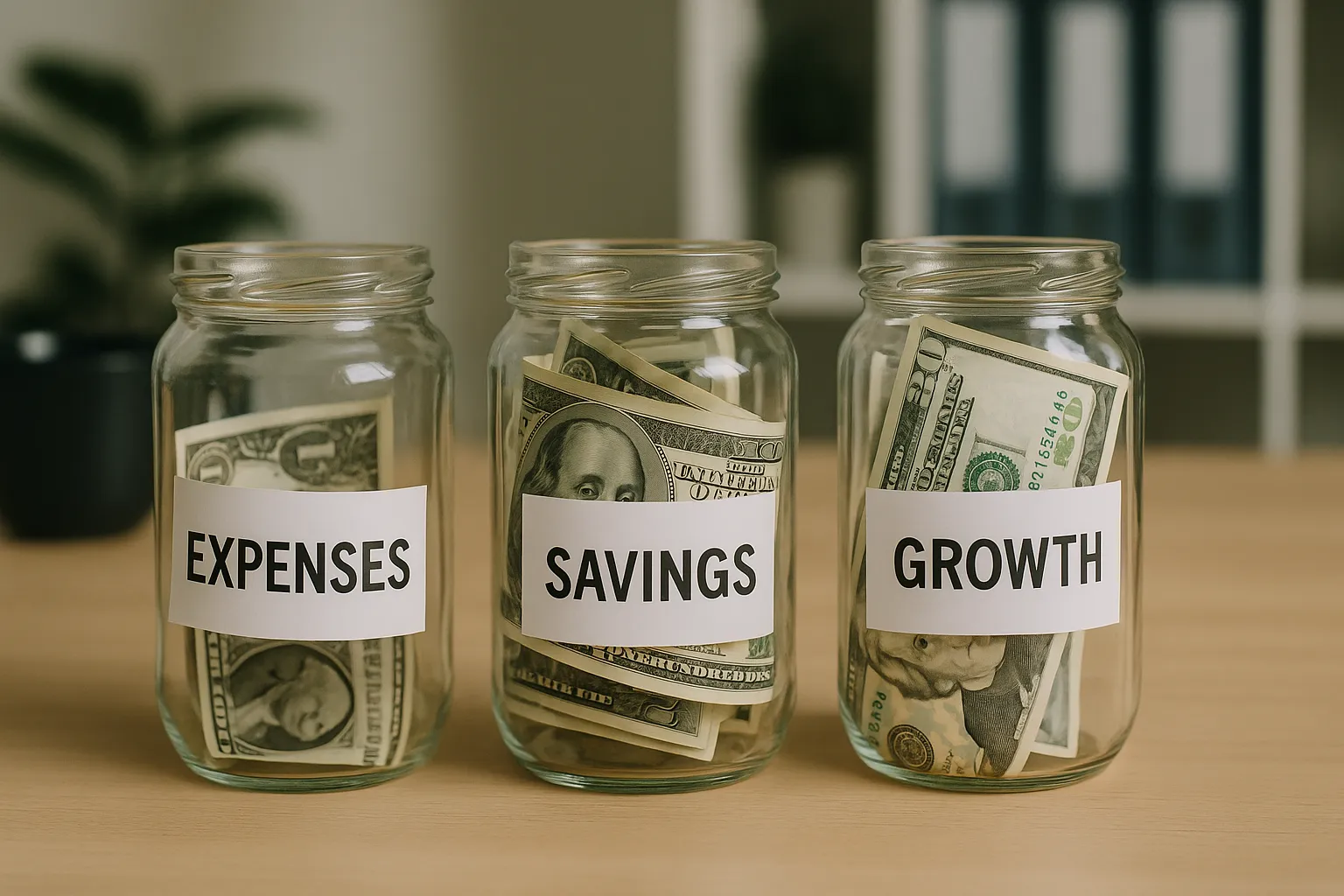
Hold too much cash in your business and you’re missing out on growth. Hold too little and one slow month could sink you. The right number depends on your stage, goals, and risk tolerance, but this guide will help you find your ideal range.
TL;DR: Most small businesses should keep 3-6 months of operating expenses in cash. This protects you from unexpected expenses or revenue dips and gives you room to make strategic decisions. If you’re consistently above or below that range, it may be time to adjust your financial strategy.
Do Cash Reserves Matter in My Business?
Running a business comes with risk, and cash is your buffer. Whether it’s a late payment from a client, a surprise tax bill, or a slow sales season, having cash on hand gives you flexibility and peace of mind. It also makes you more attractive to lenders, investors, and partners.
Here’s what healthy cash reserves do for your business:

- Keep payroll running when revenue lags
- Allow you to invest in growth without scrambling for funding
- Prevent you from dipping into personal savings or using high-interest credit
- Give you leverage in negotiations and purchases
In short: cash gives you options.
The 3-6 Month Rule (And When to Adjust It)
A common benchmark is to keep three to six months of essential operating expenses in your business bank account. But how do you know what that number actually is?
This is where clean, up-to-date bookkeeping matters. Using accounting software like Xero allows you to see your true monthly operating expenses in real time, making it easier to calculate an accurate cash reserve target instead of guessing.

Step 1: Calculate Your Monthly Operating Expenses
Include fixed and recurring costs:
- Rent or office space
- Payroll
- Software subscriptions
- Insurance
- Utilities
- Loan payments
- Any other non-negotiable costs
Let’s say your monthly operating expenses are $20,000. A healthy cash reserve would be $60,000-$120,000.
Step 2: Consider Your Business Model and Risk
The more predictable your revenue, the closer to 3 months you can be. The more seasonal, volatile, or growth-oriented you are, the more you’ll want to lean toward 6 months or more.
For example:
- A landscaping company that slows in winter may need a bigger cushion.
- A service-based agency with recurring clients may be fine with less.
- A product-based business scaling fast may want even more to cover inventory cycles and marketing pushes.
Is It Possible to Save Too Much Money in My Business?

Yes, it’s possible to be too conservative. If you’re holding more than six months of cash and not reinvesting in growth, saving for taxes, or taking distributions, you could be missing opportunities.
Here are smart ways to deploy excess cash:
- Invest in marketing or capacity-building
- Hire a key team member
- Pay off high-interest debt
- Start building a tax reserve
- Contribute to a SEP IRA or 401(k)
- Work with a fractional CFO to map out a growth plan
What If I Don’t Have Enough?
Don’t panic, but don’t ignore it. If you’re running on empty each month, you’re exposing your business to risk. Start by:
- Cutting unnecessary or bloated expenses
- Improving invoicing and collections
- Building a monthly profit target into your pricing
- Setting up a savings plan to slowly build your reserve
A good target is to set aside 10% of your revenue each month until you hit your goal.
Final Thoughts: Cash Isn’t Just for Emergencies
Think of cash not as dead money, but as fuel for better decisions. When you’re not constantly worried about covering bills, you have the mental and financial space to lead your business with intention.
Want Help Finding Your Number?

At JBS, we work with business owners across the country to help them get clear on their numbers, grow with confidence, and avoid costly mistakes. Whether you’re at $100K or $5M, we’ll help you build a cash strategy that actually supports your goals.
Get a 100% FREE financial health check today, or reach out for a personalized plan based on your business model.