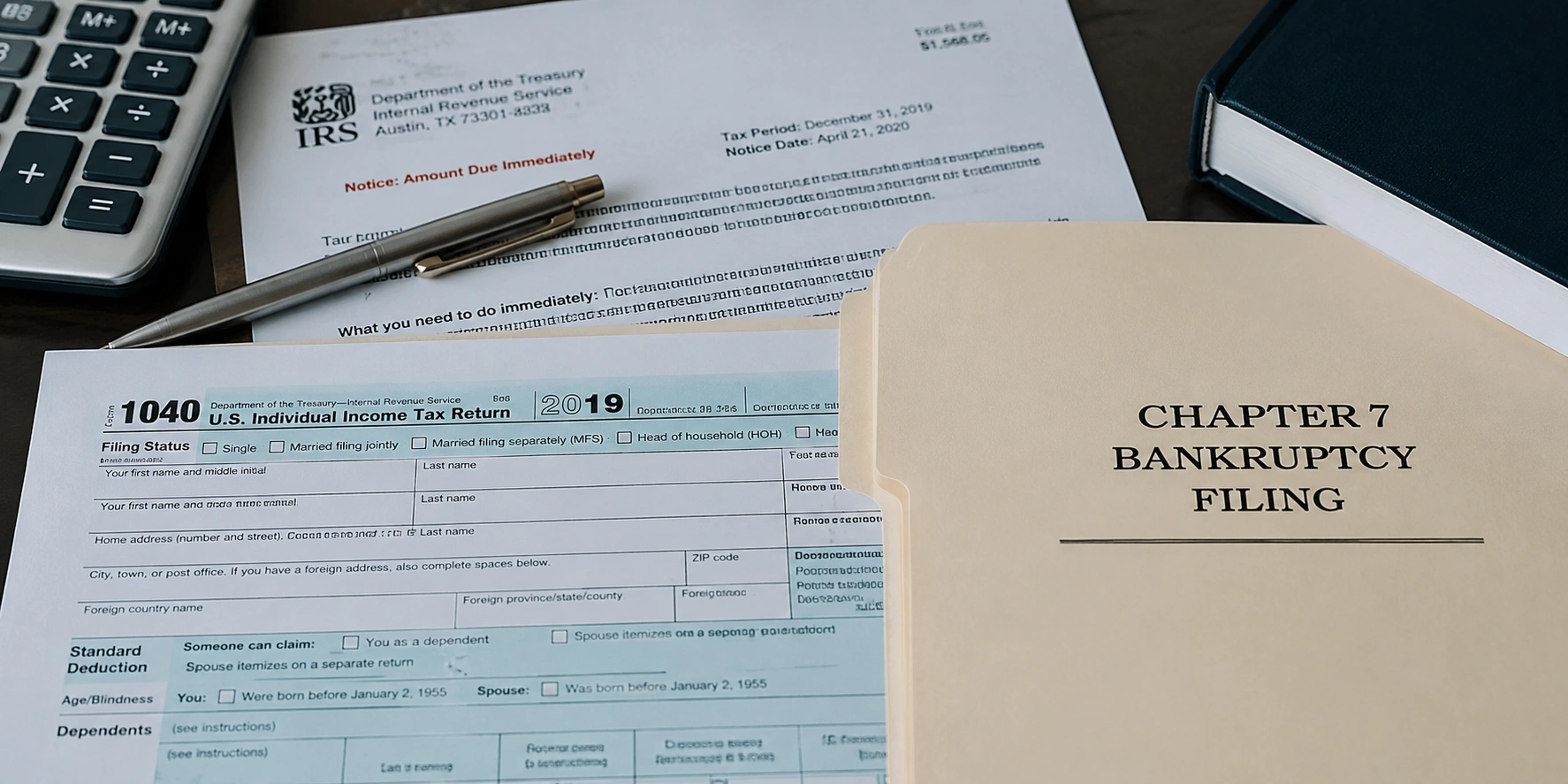
Unlike credit cards or medical bills, tax debt comes with its own set of rules, and many people assume bankruptcy simply can’t touch it, but that assumption isn’t entirely accurate. Let us explain.
TL;DR: Certain income tax debts can be discharged in bankruptcy if they meet strict age and filing requirements, but payroll taxes, trust fund taxes, and fraud-related penalties generally cannot be erased. JBS provides tax services to individuals and freelancers working through exactly this kind of decision.
What Determines Whether Tax Debt Qualifies For Discharge?
Whether a tax debt can be discharged comes down to three factors: the type of tax, the age of the debt, and your filing history. Only income taxes are eligible for discharge at all.
Payroll taxes, trust fund taxes, and penalties connected to fraud are excluded no matter how old the debt is or how the bankruptcy is filed.
Beyond that, the debt has to clear specific timing thresholds tied to when the return was due, when it was filed, and when the IRS assessed the tax. Those thresholds are commonly known as the 3-2-240 rule, covered in more detail below.
Is Tax Debt Included In Bankruptcy Even If It Cannot Be Discharged?
Tax debt must be listed on your bankruptcy schedules regardless of whether it ultimately qualifies for discharge. Being included in a filing and being eliminated by that filing are two separate outcomes. A debt that doesn’t meet the discharge requirements still has to be disclosed, and it typically gets treated as a priority claim that must be repaid in full under a Chapter 13 plan, or that survives a Chapter 7 case entirely.
What Is The 3 Year Rule For IRS?

The IRS and bankruptcy courts actually apply three separate timing tests together, sometimes called the 3-2-240 rule. All three generally need to be met before an income tax debt can be discharged.
The Three Year Rule
The tax return for the debt in question must have been due at least three years before the bankruptcy filing, including any extensions taken.
The Two Year Rule
You must have actually filed the tax return at least two years before filing for bankruptcy. A late return filed after the IRS files a substitute return on your behalf typically doesn’t count.
The 240 Day Rule
The IRS must have assessed the tax debt at least 240 days before the bankruptcy filing. This window can be extended if the IRS suspended collection due to an offer in compromise or a previous bankruptcy case.
Missing any one of these three conditions usually disqualifies the debt from discharge, even if the other two are satisfied.
What Two Debts Cannot Be Erased?
Certain tax obligations are treated as priority debts and remain due regardless of which bankruptcy chapter is filed. Two categories come up most often.
Payroll And Trust Fund Taxes
Taxes withheld from employees, along with trust fund taxes owed by business owners, are considered money that was never really the debtor’s own to begin with. Bankruptcy doesn’t erase this category.
Fraud Or Willful Evasion Penalties
Any tax debt tied to a fraudulent return or intentional evasion is excluded from discharge as well. Courts look closely at patterns of behavior here. An honest mistake or a temporary cash flow problem is treated very differently than deliberately hiding income or falsifying records.
Will I Lose My Tax Refund If I File Chapter 7?
A tax refund you are entitled to at the time you file becomes part of the bankruptcy estate, and a trustee may claim some or all of it to pay creditors, particularly if it reflects income earned before the filing date. So yes, it’s possible. Refunds tied to income earned after the filing generally are not affected. Timing your filing around when you expect a refund is one of the details worth reviewing with a tax professional before you file.
Does A Tax Lien Survive Bankruptcy?
Discharging the underlying tax debt doesn’t automatically remove a recorded federal tax lien. The IRS can still enforce that lien against real estate or other property you owned before filing, even though you are no longer personally liable for the debt. Taxpayers dealing with an existing lien often need to explore separate strategies such as lien subordination or negotiating a release, which is where working with a tax professional becomes valuable.
Chapter 7 Versus Chapter 13 For Tax Debt
Chapter 7 can eliminate qualifying tax debt outright, which makes it appealing when the timing rules are met and there aren’t many assets to protect. Chapter 13 tends to be the better route when a portion of the tax debt is priority debt that cannot be discharged, since it lets you repay that amount over time while newer or non-qualifying penalties and interest stop accruing during the plan.
JBS provides tax services to real estate investors and business owners who often carry more complex tax situations, and the right chapter can depend heavily on the types of debt involved and what you want to protect.
What Happens If I Owe The IRS And Can’t Pay?
Bankruptcy isn’t always the first or best tool available, and it is worth ruling out other options first.
Requesting Currently Not Collectible Status
Options like Currently Not Collectible status can pause IRS collection activity for taxpayers facing genuine hardship without requiring a bankruptcy filing at all.
Acting Before A Balance Becomes Overdue
Taking action before a tax bill goes past due generally leads to better outcomes than waiting, since the IRS has formal repayment options available to taxpayers who reach out proactively.

Staying Current Going Forward
Staying on top of estimated tax payments, and catching under-reported income before it becomes a bigger problem, can help you avoid a debt spiral in the first place. For more detail on how bankruptcy discharge rules apply to different types of tax debt, the IRS Bankruptcy Tax Guide (Publication 908) is the most reliable source.
If you are weighing bankruptcy against other paths to resolving tax debt, our tax services for individuals and business tax services teams can help you map out what actually applies to your situation. Contact JBS to talk through your options.
Note: This article is for educational purposes only and does not constitute tax advice. Tax rules, figures, and percentages are subject to change and this article may not be fully up to date; visit IRS.gov for the most current information and consult a tax professional for guidance specific to your situation.