Every January and February, freelancers, contractors, and small business owners start receiving 1099 forms from the clients and platforms that paid them during the year. Most people glance at the total, file it away, and move on. But when the number on a 1099 does not line up with what’s recorded in your bookkeeping software, that small discrepancy can turn into a much bigger headache during tax season. Understanding why these mismatches happen and how to resolve them can save you from IRS notices, delayed refunds, and unnecessary stress.
TL;DR: 1099 and bookkeeping mismatches are usually caused by timing differences or reporting quirks, but leaving them unresolved can trigger an IRS notice, so reconciling your books against every 1099 before filing is the best way to catch errors early.
Why Do 1099 Totals Sometimes Not Match Your Books?

There are several common, non-alarming reasons a 1099 total might differ from what your bookkeeping shows. For example, payments made in late December but not received or deposited until January can land in different tax years depending on how each side tracks the transaction.
Refunds, chargebacks, or returned payments may be excluded from a 1099 but still appear in your books. Some platforms also issue 1099-K forms for gross payment volume, which can include sales tax, shipping fees, or platform charges that inflate the number compared to your net business income.
Common Timing And Reporting Differences
Cash basis and accrual basis accounting can also account for gaps. If your books are kept on an accrual basis, income gets recorded when it’s earned rather than when it’s received, while most 1099s report on a cash basis. This single difference explains a large share of the mismatches JBS sees each tax season among freelancers, business owners, and real estate investors managing multiple income streams.
What Happens If You Ignore The Discrepancy?
The IRS uses an automated underreporter program to compare the income reported on your tax return against the 1099s and W-2s filed by third parties. When your return shows less income than what was reported to the IRS by a client or platform, the system can flag the return for review. This often results in a CP2000 notice, which proposes additional tax, interest, and sometimes penalties based on the unreported amount. These notices are not audits, but they do require a timely, documented response, and ignoring one can lead to a formal assessment against you.

How A CP2000 Notice Typically Unfolds
The notice will list the income the IRS has on file, compare it to what you reported, and calculate a proposed balance due.
You generally have 30 days to respond, either by agreeing with the proposed changes or by providing documentation that supports your original return.
Solid bookkeeping records make this process far easier, since you can point directly to invoices, bank deposits, and reconciliation reports rather than trying to reconstruct the year from memory.
How To Reconcile 1099 Income With Your Books Before Filing
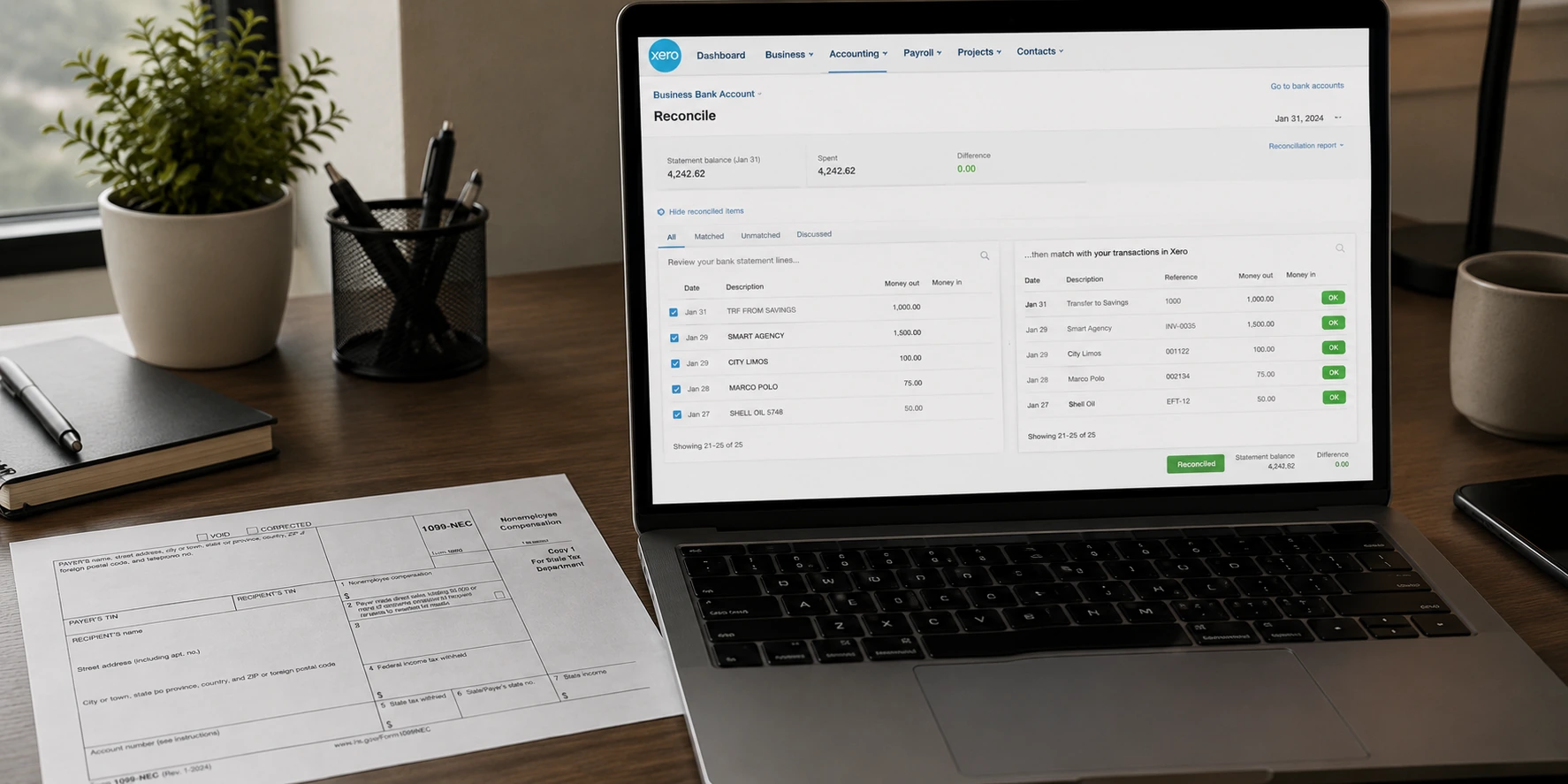
Before your tax preparer files your return, compare every 1099 you receive against the corresponding entries in your accounting software. Cloud platforms like Xero make this easier by matching bank feeds directly to invoices and payments, so gaps between a 1099 total and your recorded income are easier to spot than they are in a spreadsheet pulled together at the last minute. Confirm that gross payment amounts match, account for any fees or adjustments separately, and note any timing differences in writing so they can be explained if questioned later.
JBS provides tax services to freelancers and businesses who want this reconciliation handled correctly the first time, rather than discovered after a notice arrives. Businesses juggling multiple income streams and platforms often benefit from a dedicated bookkeeping process that flags these gaps throughout the year instead of scrambling each January.
Clean, consistent bookkeeping is the best defense against 1099 mismatches. Reviewing entries monthly rather than once a year makes discrepancies easier to spot and resolve while the details are still fresh, and it keeps your return aligned with what the IRS already has on file.
Work With JBS On Accurate, Reconciled Books
JBS combines hands-on bookkeeping with tax preparation so that the numbers on your return always trace back to documented, reconciled records. Our team works with freelancers and real estate investors as well as growing businesses that need ongoing bookkeeping and controllership support. If your business has run into common accounting mistakes that make tax time stressful, or you’re wondering whether automated tools alone are enough to keep your books accurate, our business tax services team can help you build a reconciliation process that holds up at filing time and beyond.
Note: This article is for educational purposes only and does not constitute tax advice. Tax rules, figures, and percentages are subject to change and this article may not be fully up to date; visit IRS.gov for the most current information and consult a tax professional for guidance specific to your situation.